
Over 200 Years of the many Pubs once here in Kings Langley
Pubs: Past & Present
Over the years, Kings Langley has had many great public houses that were a part of the heart and soul of the village.
A Glimpse into the Past
Brewers, Breweries &Pubs
Back when water wasn’t always pure, ale was the safest drink. This would have been brewed in the kitchen by the housewife, using barley. Later, brewhouses would be set up and ale would be offered for sale with good ale becoming popular. In 1496, during the reign of Henry VII and act was brought in containing a clause regulating the sale of ale. A bush tied onto a stick would advertise where ale could be bought. In Kings Langley in 1670, a Nathaniel Wingfield “sold drink in the night time and on Sundays” although we don’t know if this was his own beer.
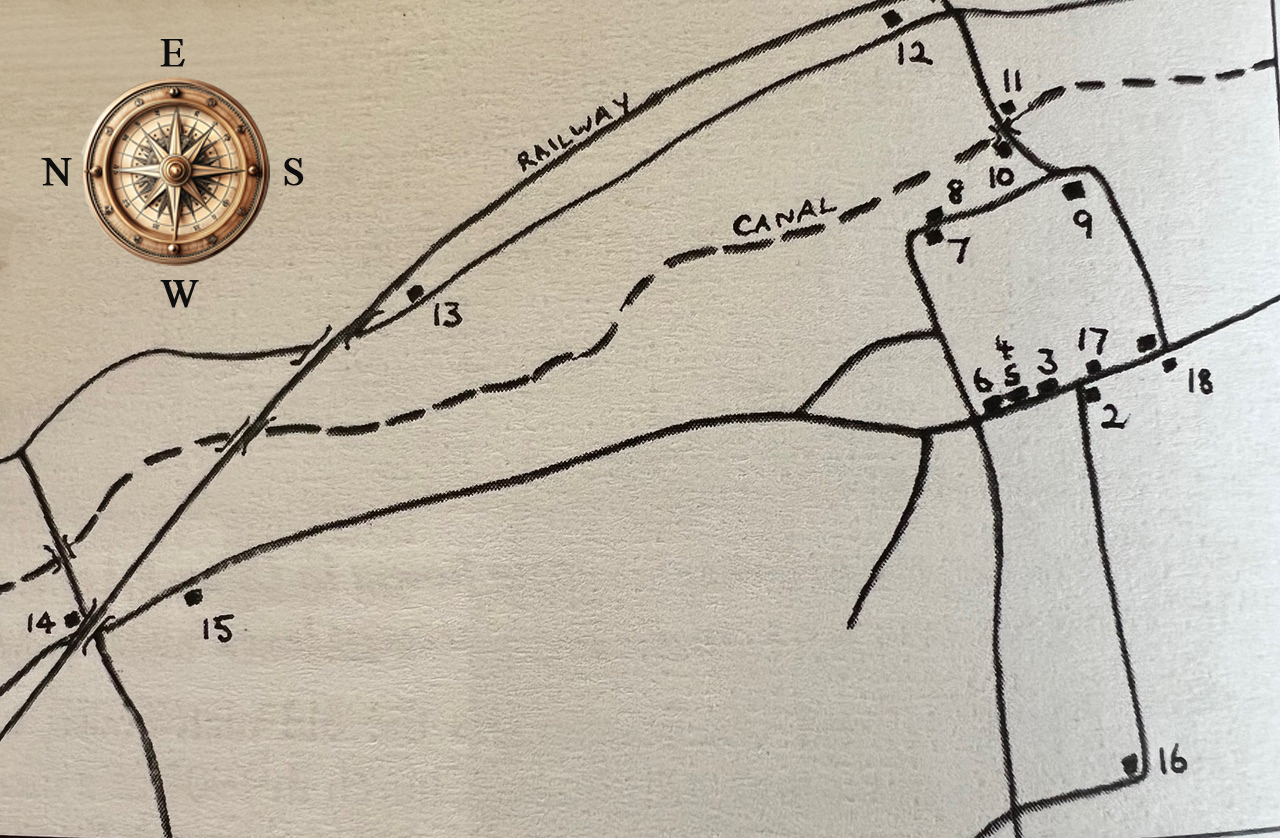
1. The Salutation
2. The Cock
3. The Hollybush
4. The Man in the Moon
5. The Swan
6. The Jolly Miller
7. King William IV
8. Red Lion Waterside
9. The Lamb
10. The Griffin
11. The Boatman
12. The Bell
13. Railway Arms
14. Red Lion Nash Mills
15. The Eagle
16. Old Palace
17. Saracens Head
18. Rose & Crown
In Kings Langley Court Rolls there are records for hundreds of years of Ale Tasters being chosen for the village. Ale tasters were nominated to taste for strength and quality of the ale and to check the measures were legal.
By the 17th Century, brewing in Kings Langley was becoming commercialised. In a Star Chamber return in 1633 there are records of James Goodwin keeping a wine tavern at The Crown, which was probably on the East side of the High Street near the later brewery.
Pubs Timeline Image Coming…
Mordecai Goodwin started brewing in the village in 1720. He already leased several Inns in the area. When he died in 1766, the business passed to his daughter Sarah, who had married Thomas Groome. It continued in the Groome family for another 130 years. The brewery stood on the site of what is now known as The Orchard. In 1830 the family built the house now known as The Blue Court on the corner plot. One of the village wells was on this site.
The Groomes were an important village family and they have a memorial in All Saints Church. The family ran the brewery throughout the 19th Century until John Groome’s death in 1897. There were no sons to pass the business to and it was sold to Benskins for £64,000. The sale included 32 licensed properties. Eight were in Kings Langley and the rest in surrounding villages. Benskins closed the brewery shortly after. The Rose and Crown and The Blue Court are at the Southern entrance to the village.
For a few years at the beginning of the 20th Century there were 14 public houses trading in or around Kings Langley, more than at any time before or since. Our 17th and 18th century inns prospered because the village is on the main road from London to Wales. Coaches would stop to change horses and for refreshments. The Saracens Head, The Rose and Crown and the Eagle were busy coaching inns until the coach trade ceased with the coming of the railways.
Three Pubs worth a special mention
The Saracen’s Head (High Street)
The Saracen’s Head (High Street)
One of the oldest surviving buildings in Kings Langley, the Saracen’s Head dates back at least to 1619, when it was already operating as an inn in the centre of the High Street.
Early history
The site was known in the medieval period as Marlerescroft, a parcel of land held by the manor.
Its name reflects a common English pub naming tradition dating to the Crusades, when “Saracen’s Head” became a popular sign across England.
Coaching era
The inn flourished during the 18th-century coaching period, when the Sparrows Herne Turnpike (later the A41) passed directly through the village. Stagecoaches travelling between London and the Midlands stopped here to:
-
change horses
-
rest passengers
-
conduct business meetings
By the early 18th century it was an inn with accommodation, later described as a family and commercial hotel and posting house.
Ownership
In 1738 the freehold was purchased by William Basil of Wilton Park, later passing into the Du Pre estate, which owned it into the 20th century.
Architecture
Originally a timber-framed jettied house, the building was remodelled in the late 17th century and rebuilt in 1893 in the mock-Tudor style seen today.
Role in village life
Historically the Saracen’s Head served as:
-
a meeting place for local societies
-
a venue for auctions and property sales
-
a public meeting room for civic matters
In the 19th century it was even used occasionally as a coroner’s court.
The Red Lion (Red Lion Lane)
The Red Lion is one of the older pubs associated with local brewing families.
Brewery connection
The Cromack brewing family operated a brewery in Kings Langley during the late 18th and early 19th centuries.
Francis Cromack married into another brewing family in 1790, taking over a brewery located near the Saracen’s Head.
By the time of the 1838 Tithe Assessment, the Cromack family owned:
-
the Saracen’s Head
-
a malt house
-
the brewhouse
-
several pubs including the Red Lion.
Later ownership
Brewing ceased in the village by 1849.
When Thomas Cromack died in 1852, his estate included five pubs:
-
The Red Lion (Kings Langley)
-
The Saracen’s Head
-
The George Inn (Nash Mills)
-
The Red Lion (Leverstock Green)
-
The Bell (Bovingdon)
These were leased to Edmund Fearnley Whittingstall of the Watford Brewery.
This marks the transition from small village breweries to larger regional brewing companies, a trend seen throughout Victorian England.
The Griffin (Water Lane Bridge)
The Griffin stood near Water Lane Bridge, close to the canal.
Canal trade connection
Its location suggests it served:
-
canal boat crews
-
railway workers
-
travellers arriving via Kings Langley station
The Grand Union Canal (1797) and London & Birmingham Railway (1838) transformed the village economy and created demand for inns near transport routes.
World War II incident
The Griffin is remembered in local history due to a dramatic wartime event.
On 20 October 1940, during the Blitz, a German bomber attack caused significant damage in the area around the pub and nearby houses. The event became a notable moment in Kings Langley’s wartime memory.


The only surviving brewery building is the old malthouse, built in 1825. It was then known as Church House, due to the Groomes having given it to All Saints Church in 1904 as a meeting hall. It was the main entertainment centre in the village until the Community Centre was opened in 1950. It is now privately owned offices.
Frances Cromack was another village brewer. In 1790 his brewery was nex to the Saracen’s Head inn. Ten years previously he had married Ann, daughter of Thomas Ingram of kings Langley, brewer so it appears he took over his father-in-law’s brewery business. Francis died in 1831 and the 1838 Tithe Assessment shows his son Thomas Cromack owning a malt house, The Saracen’s Head and the “brewhouse house” (now 49 High Street) and an orchard where he may have grown hops. Hops still grow freely along the hedges on the canal towpath.
Brewing had ceased by 1849 and in 1852 Thomas Cromack “formerly common brewer” left five public houses in his will; The Red Lion; The Saracen’s Head; The George Inn at Nash Mills; The Red Lion at Leverstock Green and The Bell at Bovingdon. They were all leased to Edmund Fearnely Whittingstall of the Watford Brewery.
The Griffin, Water Lane Bridge
On the 20th October 1940 the residents of Kings Langley awoke believing it was just another normal day. Despite the fact that World War Two had been raging for just over a year, Kings Langley had only suffered a few near misses by passing German Bombers and never expected what this day would behold.
The German bombing commenced at 19:37 when an oil bomb fell on the Ovaltine Egg Farm. During that evening further High Explosive Bombs fell at the bottom of Toms Lane, behind Balls Pond Farm on Chipperfield Road and two by the old sewage works now the playing fields behind Jubilee Walk. Luckily no injury or damage was caused. Later that evening, as the All Clear Raiders Passed signal was given most hoped for a quiet night and no doubt a few pints were drunk in the many pubs Kings Langley had, including The Griffin on Water Lane Bridge.
Just before the stroke of midnight, Kings Langley experienced its darkest hour when a German Bomber dropped a string of 10 High Explosive Bombs across the village. The first landed in rough ground behind Taylor’s Tools (then the Co-Op) and the rest ran in a line south east across the village.

One of these bombs made a direct hit on The Griffin Pub on Water Lane Bridge, demolishing the back of the building and killing the landlord Edward “Ted” Carter. Sadly his faithful dog was also mortally injured.
Ted Carter’s grave is in All Saints Church grave yard.
Discover the Rich Tapestry of Kings Langley
Step into the past and uncover the fascinating stories of Kings Langley. From Royal Residences to Industrial Milestones, our village history is waiting for you. Dive deeper into our heritage exploring Kings Langley's own online "Museum" . . this new website.
