
Grand Union and Kings Langley - a Rich Heritage
History of the Canal in Kings Langley
The Grand Union Canal movement in the second half of the 18th Century, coupled with the turnpiking of the roads, stimulated internal trade and produced a much increased flow of goods to and from ports further afield.
A Glimpse into the Past
The History of the Canal in Kings Langley


The Canal movement in the second half of the 18th Century, coupled with the turnpiking of the roads, stimulated internal trade and produced a much increased flow of goods to the ports. The canals and the new roads made the industrial revolution possible. At Kings Langley the flow of the River Gade was channelled and controlled.
The section of the Grand Junction Canal (the Grand Union Canal from 1929) from London to Boxmoor was opened in 1797. Originally it was used solely for goods, including Welsh slates and imported machine made bricks which gradually replaced local building materials. Coal from the Midlands proved much cheaper. Local produce was taken up to the capital and the barges (narrow boats as they were known because they had to be no wider than seven feet and may be as long as seventy feet) came back with load of manure and street sweepings. These boats carried up to sixty tons and were hauled by mules and donkeys as well as horses. Before long the canals were carrying passenger services as well as goods. Packet boats, using relays of horses in the same way as stagecoaches, were able to keep up average speeds of around eight miles an hour.
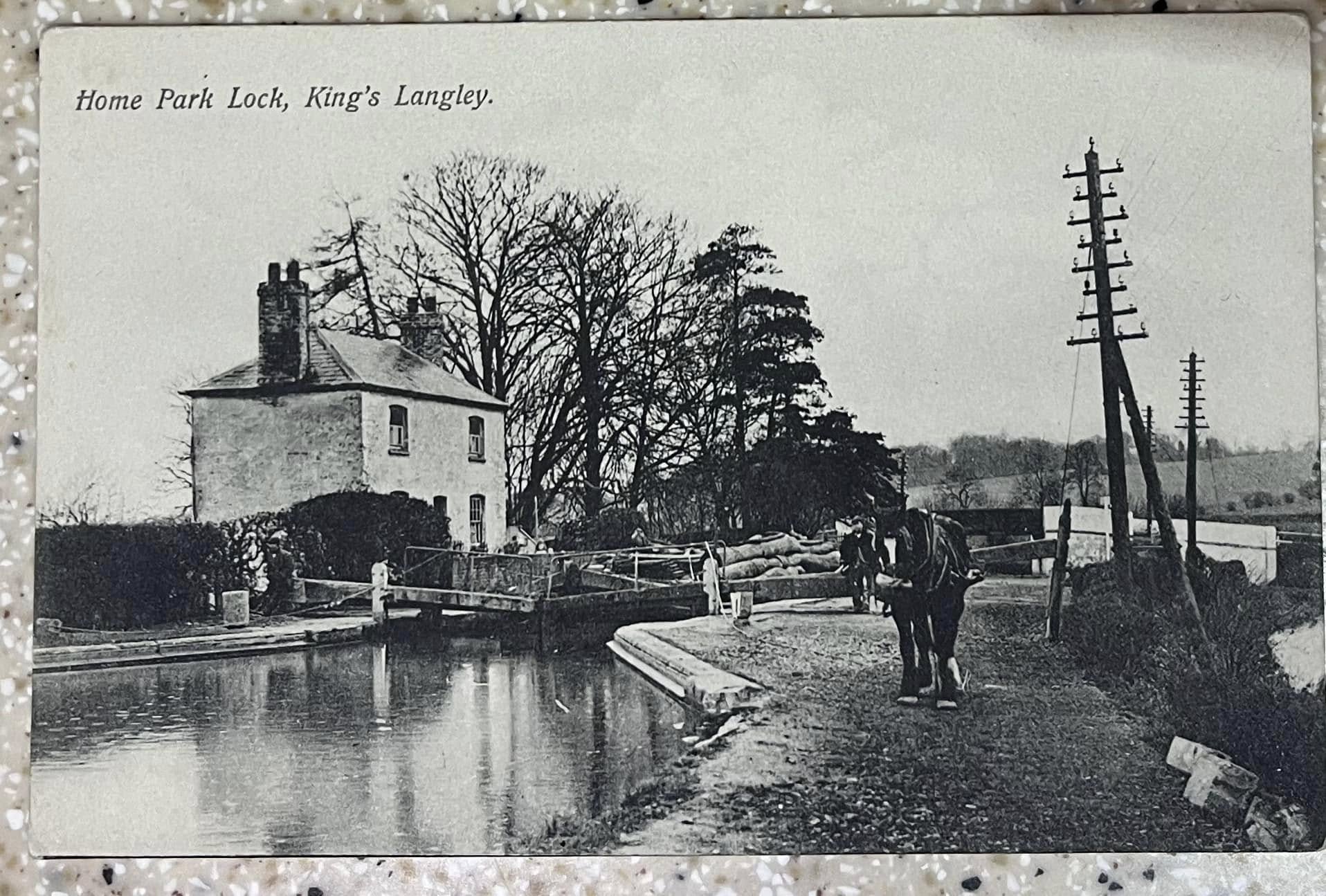
Home Park Lock Kings Langley
The building of the canal affected the life of the village in ways we might not now expect. At least two of the inns (The Griffin and The Boatman in Water Lane) had stabling for tow-horses and another (The Lamb at the junction with Church Lane – now replaced with housing) had a tack room for their harness when boatmen stayed overnight.
Before the end of the nineteenth century steam powered boats came into general use. Many of these were able to tow a second unpowered boat or “butty”. Steam power went out in the early 1930s to make way for the diesel engine.
When the canal was first built it must have been the greatest boon to the farmers of the neighbourhood. However, it’s importance as a principal means of transport was short lived, since before long it was overtaken by the new railway (opened in 1837). Because of the greater speed of the trains the canal was unable to retain the traffic in perishables and passengers, but it kept going for some time with the transport of heavy goods. It was reclassified as a cruising waterway in 1968.
Adapted from Palace, Priory and Mills KLLH&MS (1987)
Discover the Rich Tapestry of Kings Langley
Step into the past and uncover the fascinating stories of Kings Langley. From Royal Residences to Industrial Milestones, our village history is waiting for you. Dive deeper into our heritage exploring Kings Langley's own online "Museum" . . this new website.
