
Kings Langley Was Home To A Royal Palace
Kings Langley Royal Connections
For 200 years the Kings and Queens of England and their families visited the village regularly and some of them spent important parts of their lives here.
Royal Connections to Kings Langley Including the Royal Palace
The earliest known royal residence in Kings Langley was a hunting lodge during the lifetime of Henry III (reigned 1216 – 1272). This was probably situated at Little London (between the present canal and A4251 road, towards Langleybury). It would have been built there for hunting in the royal forest – a deer park thick with oaks and beeches, part of a great forest stretching out from London to Berkhamsted.

Queen Eleanor of Castille, the First Wife of Edward I acquired the Manor of Chilterne Langley or Langley Chenduit in 1276. The original Manor is thought to have been near the Church. In 1278 there is mention of a ‘New Start’. It is thought that this was the date when the palace at the top of the hill was started. The right angled turn at the top of Langley Hill marks where the road ran directly into the main Manor entrance through the ‘Corte Gate’. The South boundary of the Rudolf Steiner School ground marks approximately the boundary between the Palace and the Park
A great deal of building was carried out between 1279 and 1281, including a new garden which was planted with vines. Queen Eleanor died in 1290, and has been credited with introducing carpets and baths (les stues). The accounts of 1291-1292 show money was used to embellish the buildings. The hall was painted and decorated with 54 shields and a picture of ‘Four knights seeking a tournament’.
In 1291 a mason, Martin of Ray was paid £66/13/4 for making a cellar which is next mentioned in 1308, during the reign of Edward II, when horses were kept in ‘La Cave’ as the great cellar was named. Unfortunately there has been no archaeological evidence of the presence of horses, but in the same year accounts mention “coopering tuns of wine” at ‘La Cave’.
By early in the 14th Century the Palace was described as having three courts. The Great Court contained the Royal Apartments which included the hall and chapel, Prince’s Chamber and Queen’s Chamber. The domestic buildings including bakery, larder, roasting house and saucery in addition to the Great Kitchen. Ther were also stables, barns and mills, a hunting lodge and Great and Little Parks and gardens.
Important Royal Connections (click on the individual links to expand)
Edward I (1239-1307)
After Eleanor’s death in 1290, Edward I took up residence in Ashridge. When he married Margaret of France in 1299, he returned to Langley. Following Edward of Caernavon’s investiture as Prince of Wales, in 1302 Edward I granted Langley to him. He kept it in his own hands until his death
Edward II (1284-1327)
Following his mother Eleanor’s death, Edward II established a Dominican Friary at Kings Langley in 1308. The palace remained his favourite residence until his death.
Edward III (1312-1377)
Edward III used Langley as his Seat of Government during the Black Death. His fourth surviving son Edmund de Langley was born here in 1341, the occasion being marked by a tournament. Edmund became the 1st Duke of York. Edmund, his wife Isabel of Castile and their three children spent many of their years at Kings Langley. Following their deaths, Edmund and Isabel were buried at the Friary next to their palace home. Their tomb was later moved to All Saints Church in the centre of the village, where it still stands.
During Edward III’s reign, considerable work was done on the bath house. Hot water was installed for cisterns and an oven in “a new kitchen for the stues”. A large area of hearths and a possible hot plate were discovered some distance East of the cellar. Also listed were a counting house, an organ and a camel! In 1368 the King installed a striking clock, made by John Belleyetere in the Belfrey of the Friary Church.
Richard II (1377-1399)
Richard II, son of the Black Prince was greatly attached to Langley as a boy. He held stately courts and issued proclamations from the palace of Langley Regis. Accounts for the years 1384-1388 during Richard II’s reign show a large amount of work was done when “the aforesaid stue broken by the said Lord King” was repaired. Locks were also supplied “for a certain little gate between the Inner and Outer Courts and for the doors of the adjacent Church of the Friars Preachers to keep and exclude said Friars from the King’s Household”. In 1392 and 1396 he brought the court to the palace to celebrate Christmas.
Richard was often at Langley and came here from St. Albans following the Peasant’s Revolt, where he had been obliged to agree to cruel punishments, but here on his own manor, he was merciful. We know the names of local rebels who burnt houses behind the Saracen’s Head. They all appear to have prospered. Richard was deposed and died as a prisoner in Pontefract Castle – according to Shakespeare murdered on behalf of the usurper Henr IV. A scene in Shakespeare’s Richard II is set in the garden at Langley. Richard’s body was brought to the Friary at Langley for an ignominious burial. “ The great ones were not there, neither was there any crowd of common people, nor was there anyone to ask them (the Bishops of Chester and St. Albans) to dinner after their task” Hi body was later removed to Westminster by Henry V in 1414.
Ralph Verney (1452-1528)
Ralph Verney was granted the Lordship of Langley Manor and may have built some accommodation for himself on the site. We have records of “Verney’s Lodgings” which must have been quite a large and habitable house. A survey of the Friary buildings in 1552 mentioned “a little Mansion called Verney’s Lodgings” and “three old and decayed buildings beyond repair”. These Lodgings are again mentioned as a “fayre lodging” occupied by the Countess of Bedford, but in 1591 Verneys’ Lodging is the name of a three acre field and the “seite of the manor” is reported as “decayed”.
Excavations
The information above is derived from historical documents and is largely from an article written by Denis Miles (from notes made by Mrs Mary Tisdall) for the Kings Langley Museum Society Newsletter No. 4 in 1970. Three excavations carried out in 1962, 1970 and 1974-6 revealed exactly where the different parts of the palace had been. “La Cave”or the large cellar was uncovered and also the foundations of “Le Longrewe” or long house which is believed to have contained the principal apartments.
(click on the images to enlarge)
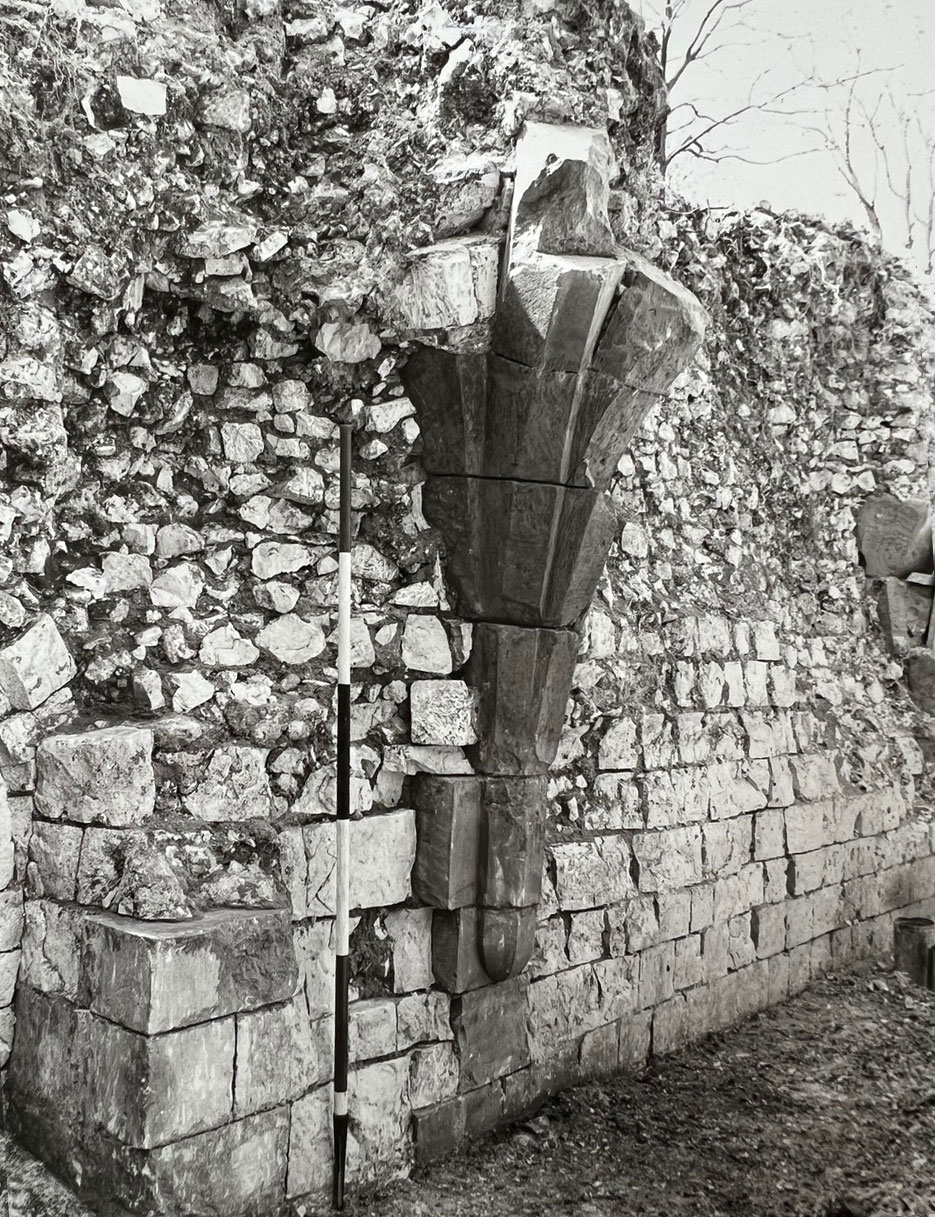


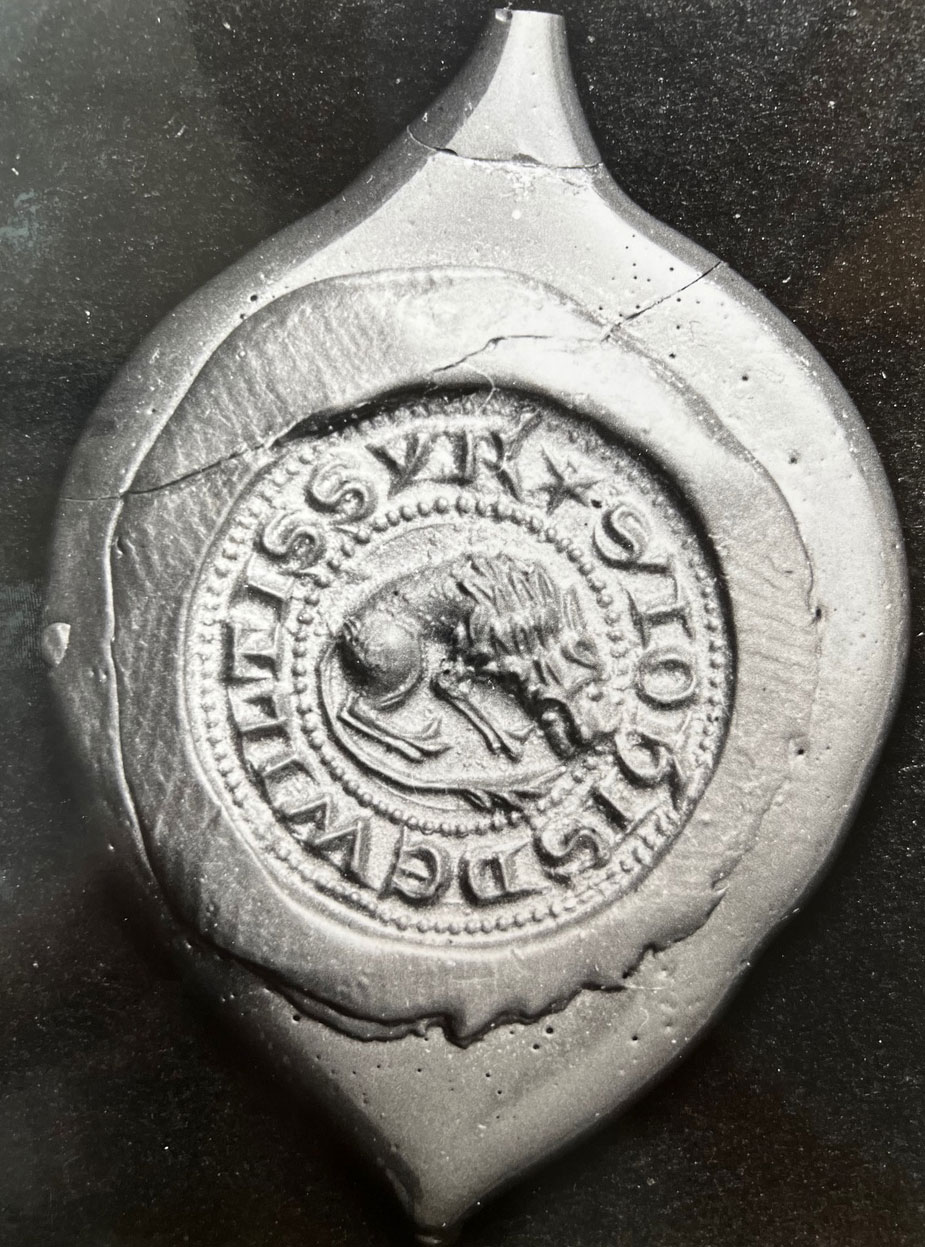
Building works of the last hundred years have sadly destroyed the chance of knowing how large the palace was and how it was laid out. The site is now occupied by what was until recently the Rudolf Steiner School.
A full report of the excavations of the Palace of Kings Langley conducted by David Neal in 1974-76 is held in our archives.
Discover the Rich Tapestry of Kings Langley
Step into the past and uncover the fascinating stories of Kings Langley. From Royal Residences to Industrial Milestones, our village history is waiting for you. Dive deeper into our heritage exploring Kings Langley's own online "Museum" . . this new website.
